Controlled Environment Agriculture (CEA) sits at the center of a modern paradox: it offers a vital solution to global food security, yet its inherent resource intensity invites intense scrutiny. Today’s investors, retail partners, and regulators are no longer satisfied with the promise of sustainable farming; they demand empirical proof. In a shifting macroeconomic & regulatory landscape, Artificial Intelligence (AI) presents new opportunities for operators to streamline resource management, carbon accounting, and reporting & disclosure, all while protecting the bottom line.
Industry experts and leading operators suggest that unlocking this value relies on integrating AI across operations, measurement, and reporting. Below, we outline seven critical applications where AI is actively decoupling yield from resource consumption and securing preferred status with major retailers.
Jump to:
1. Predictive Climate Control (HVAC)
Traditional environmental controls react to changes inside the facility. AI flips this paradigm by utilizing machine learning (ML) to ingest external weather forecasts, historical data, and internal thermal dynamics to anticipate changes before they occur. By pre-cooling or adjusting humidity before a major temperature spike, facilities can significantly flatten peak energy loads, extending the lifespan of expensive HVAC equipment and reducing energy consumption.
Henry Gordon-Smith, CEO of Agritecture, says:
“In advanced CEA operations, AI is already being applied across sensor networks to fine-tune climate, irrigation, and energy use, while flagging anomalies in crop health or equipment performance before they become major losses… custom, farm-specific LLMs are emerging as a way for operators to capture institutional knowledge, standardize workflows, and keep valuable operational IP in-house rather than outsourcing their intelligence to generic platforms.”
2. Precision Fertigation & Water Looping
Water and nutrient waste are critical pain points for both P&L and environmental compliance. AI-driven nutrient management systems now analyze plant uptake rates in real time, rather than relying on static, scheduled dosing. This level of granular optimization minimizes fertilizer runoff and maximizes the efficiency of closed-loop water recirculation systems, lowering input costs and mitigating wastewater compliance risks.
3. Smart Grid Integration (Demand Response)
Energy is arguably the single largest variable cost in CEA. AI systems can now autonomously interface with local utility grids, negotiating energy usage in real time. By intelligently shifting non-critical loads (such as scheduled cooling cycles or specific lighting zones) to off-peak hours, operators capitalize on cheaper, greener energy, turning demand response into a viable revenue stream or cost-offset.
4. Computer Vision for Integrated Pest Management (IPM)
Beyond environmental controls, AI is revolutionizing how operators interact with the crop itself, driving down chemical inputs and minimizing post-harvest waste. Historically, pest and disease management has been a blunt instrument, often requiring facility-wide treatments. Today, AI-powered computer vision uses strategically placed cameras and mobile sensors to detect micro-signs of stress, pests, or disease days before they are visible to the human eye. Early detection allows for highly targeted spot-treatments. This drastically reduces chemical and biological input costs, protects yield, and ensures a cleaner, safer final product.
5. Yield Forecasting & Supply Chain Synchronization
A significant portion of agricultural carbon emissions is tied to food waste. Accurate harvest prediction has long been the holy grail for CEA operators trying to align supply with retail demand. Advanced ML models now predict harvest volumes and timelines with unprecedented accuracy. This synchronizes the supply chain, allowing commercial teams to secure commitments ahead of time, significantly reducing shrink and waste at the distribution level.
6. Automated Carbon Accounting & GHG Monitoring
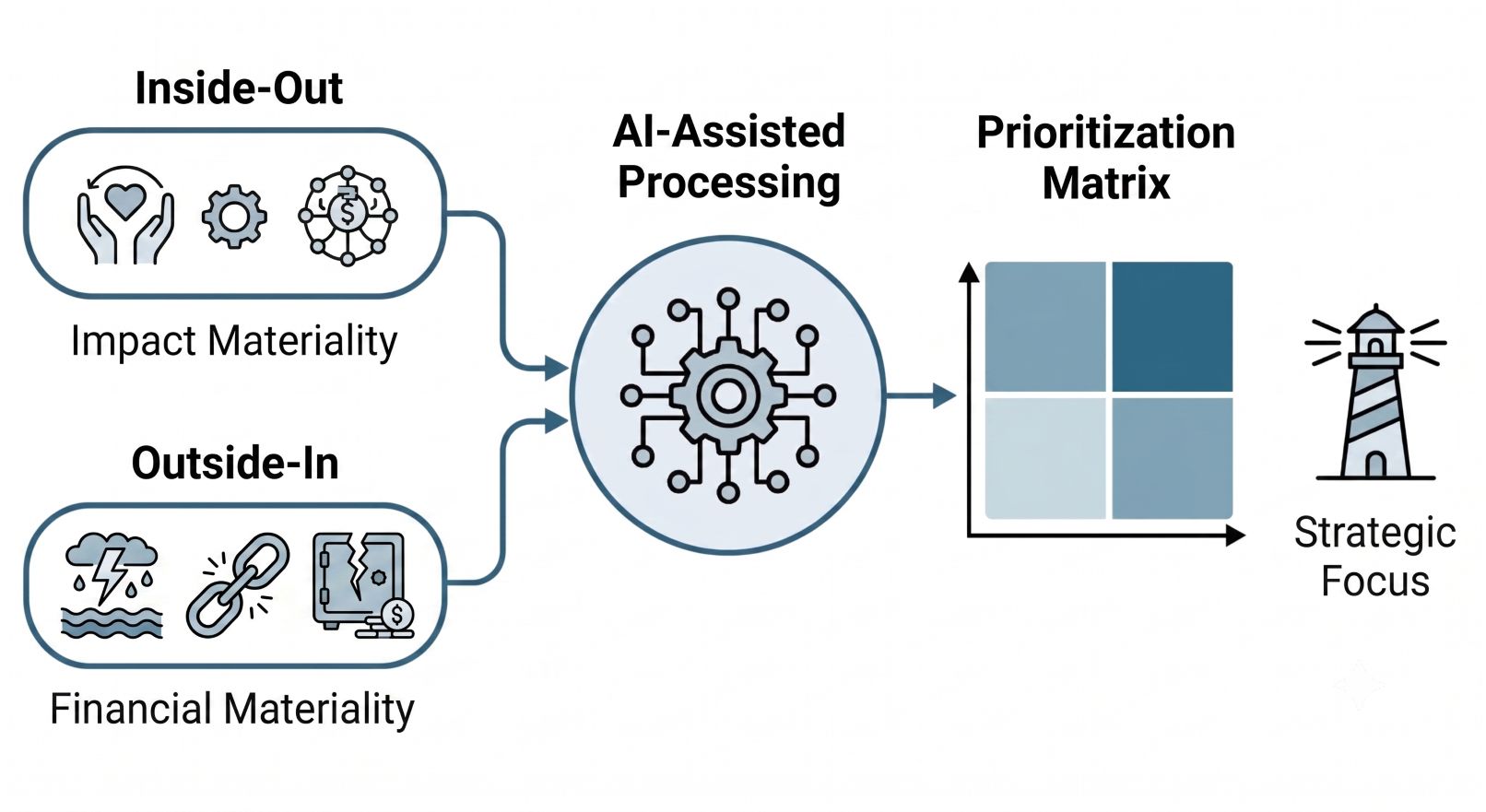
Efficiency and waste reduction are only half the battle. The true strategic advantage emerges when operational data is synthesized into verifiable ESG metrics, as manual environmental accounting is prone to human error and takes time. AI streamlines this by aggregating data from disparate facility sensors—energy meters, waste logs, logistics data—to continuously calculate Scope 1 and 2 emissions. Continuous monitoring provides C-suite executives with granular visibility into emission hotspots, allowing for course correction during the fiscal year rather than discovering misses during the annual audit.
7. AI-Enabled Compliance & ESG Disclosure
Retail mandates are becoming stricter; major buyers are increasingly tracking Scope 3 emissions down their supply chains (such as the evolution of Walmart’s Project Gigaton and CDP reporting requirements). AI utilizes Natural Language Processing (NLP) and data automation to ingest complex operational data and format it precisely to these varying scorecard requirements. This drastically reduces the administrative burden on ESG teams, ensures data integrity, and completely mitigates the risk of “greenwashing” accusations. Most importantly, clean, audit-ready data secures preferred supplier status with top-tier retailers who are desperate to decarbonize their own supply chains.
The Leadership Imperative
While the technology is transformative, the integration of AI is not a plug-and-play solution. As experts across the industry consistently note, the true bottleneck to AI adoption in CEA is rarely technological—it is human.
For CEOs and COOs, the challenge is change management. Farm managers must be trained to trust predictive models over their traditional “gut feel,” and IT departments must break down data silos to allow these systems to communicate. AI will not replace the seasoned grower; rather, it will arm them with the insights necessary to manage scale sustainably.
Amber Herzer, founder of Growth Rooted & former Head of Enterprise Program Management at Bowery Farming, calls attention to the importance of leadership:
“In my experience, people are still essential for collaboration, prioritization, sound judgment, and turning insights into action and results… AI might get us reports faster with deeper insights to direct action, but it is still people who have to do the work, challenge the assumptions, validate the outcomes. AI allows leaders to reduce the hours reporting and transition to focusing more on driving results.”
Gordon-Smith puts it similarly:
“The real value of AI in CEA is not automation for its own sake, but the augmentation of human judgment. When implemented thoughtfully, these systems help teams shorten learning cycles, reduce resource waste, and generate credible performance data for sustainability reporting and operational benchmarking.”
Ultimately, CEA operations that successfully integrate AI into daily farm ops will find themselves operating in a new reality: one where sustainability is no longer an administrative tax, but a driver of operational resilience and market dominance. If you’re ready to turn your facility’s sustainability data into a competitive advantage, contact our team for a custom assessment of your operation’s AI readiness and ESG compliance.
About the Author: Jesse Thorson