You’ve been tasked with calculating your company’s carbon footprint. Now what?
The sheer volume of data and the technicality of external standards involved in carbon footprint analysis overburdens many organizations, often prompting the exploration of software-based solutions.
Use this guide to inform your selection process by understanding the benefits and limitations of carbon accounting software
What is Carbon Accounting Software?
Carbon accounting software measures and tracks greenhouse gas (GHG) emissions. Designed to automate data collection and analysis, these programs offer a systematic approach to carbon accounting to help companies quantify their carbon footprint and set reduction targets.
Benefits of Carbon Accounting Software
Carbon accounting software simplifies a potentially overwhelming process, allowing leadership to focus on strategic decision-making.
A software program can effectively:
- Manage extreme volumes of data from hundreds of locations; for example, farms and sub-suppliers
- Adhere to established protocols
- Generate scenario analysis to evaluate different approaches
- Track real-time data
- Maintain accurate information processes
- Provide a clean interface for DIY initiatives
- Integrate with existing data sources e.g. energy utilities
- Preserve workforce bandwidth for other sustainability initiatives
Limitations of Carbon Accounting Software
Carbon accounting software often presents challenges with adoption and implementation, including these realities:
- Software delivers quantitative measurements, but no strategic analysis or reasoning
- Data output is contingent upon the quality and accuracy of data input
- Advanced technology calls for high start-up investments & labor commitments
- Some programs don’t cover the full spectrum of emissions sources
- Effective cross-team communication dictates operational success
- Complex software requires specialized training to realize its full capabilities
- When it comes to energy and carbon data, the business case for true “integration” with enterprise systems is often weak (can be more costly than it is worth in time savings and efficiency gains)
How Do You Choose Between Carbon Accounting Software Programs?
Carefully evaluate software options to ensure the tool can meet your specific needs. With so many options available, it is crucial to base your selection on qualitative and quantitative reasoning.
We recommend exploring these questions as part of the decision making process:
- Goals
- How many customers or investors require GHG reports?
- Are you compelled to actively reduce your GHG footprint or simply measure it?
- Which GHG accounting and disclosure regulations apply to your organization?
- Which voluntary GHG accounting and disclosure frameworks do you use?
- Current Infrastructure
- Does your company already use carbon accounting software? Why not?
- Or if so, which features do you want to retain and which have been problematic?
- Which existing programs will need to integrate with the new software?
- What is your IT department’s process for vetting new software providers?
- Budget
- Where will the funds come from?
- What is the budget ceiling?
- Who needs to approve the acquisition?
- Internal Engagement
- Which departments will use the software?
- How many users will need access to the software?
- Do you need to gather new data from your supply chain? If so, will suppliers be software users or will data be captured through other means?
- Who is responsible for staff training & communication?
- How intensive is the training process?
- What level of customer support is available post-implementation?
How to Maximize Software Utility
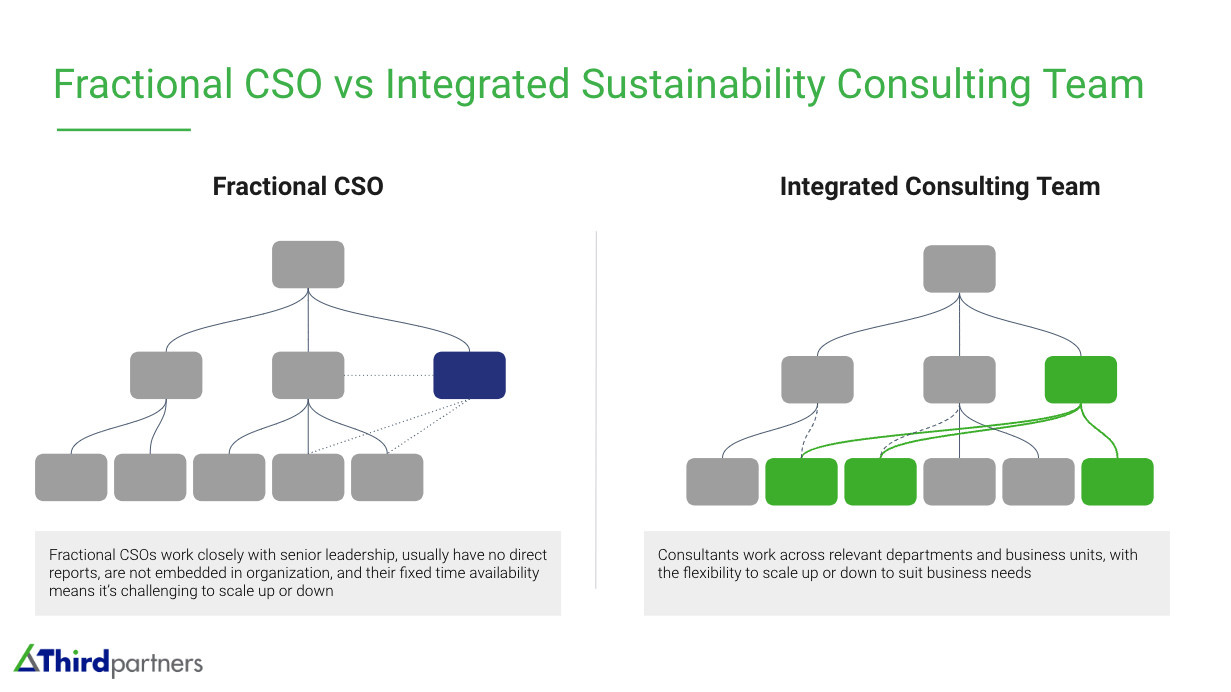
Ultimately, software supplies data, not insights. Collaboration with expert consultants can transform numbers into tailored action plans to address ESG targets and reduce your carbon footprint.

Caption: Consider the efficacy of software and consulting partnerships according to your organizational structure and maturity level of existing sustainability programs. Source: Third Partners
Sustainability consultants provide ongoing support to help your company:
- Interpret Greenhouse Gas (GHG) Protocol
There are many layers to GHG protocol and accounting regulations demand human interpretation and analysis tailored to your specific industry and framework. - Generate Insights
Data analytics can pinpoint problem areas and growth opportunities, revealing the primary source of your emissions and your most efficient avenues for reduction. - Visualize Data
Sleek and simple data visualizations track GHG emissions, facilitating easy comprehension and impactful storytelling with stakeholders. - Set Long-Term Goals
Establish realistic targets and progressive milestones to reduce footprint and overall environmental impact.
A Trusted Partner
The team at Third Partners helps clients navigate GHG accounting challenges to reduce carbon footprint, achieving internal ESG alignment to strengthen your business and operationalize your commitment to sustainability.
Contact us for a free consultation to learn more.