B Lab Global recently announced plans to establish new certification requirements for its flagship B Corp Certification, a globally-recognized signal of social and environmental performance, and dedication to impact reduction.
With a more disciplined approach, the proposed standards will tighten the qualification threshold for “B Corp” status, ensuring that the designation distinguishes true high-accountability, high-impact leaders in sustainability.
This article explores proposed changes to the B Corp Certification process and how companies can take action before implementation deadlines arrive. Consider how these new requirements might inform your organization’s ESG strategy.
What is a B Corp Certification?
To earn a B Corp Certification, companies must meet high standards of ESG performance, accountability and transparency on a wide range of measures such as supply chain, employee benefits, and charitable giving.
Certified B Corporations are required to:
- Score at least 80 out of 200 points on the B Impact Assessment (BIA) that measures social and environmental performance
- Analyze the impact of their business decisions across all stakeholders
- Amend governance structures to balance impact with profit
Why Are B Corp Standards Changing?
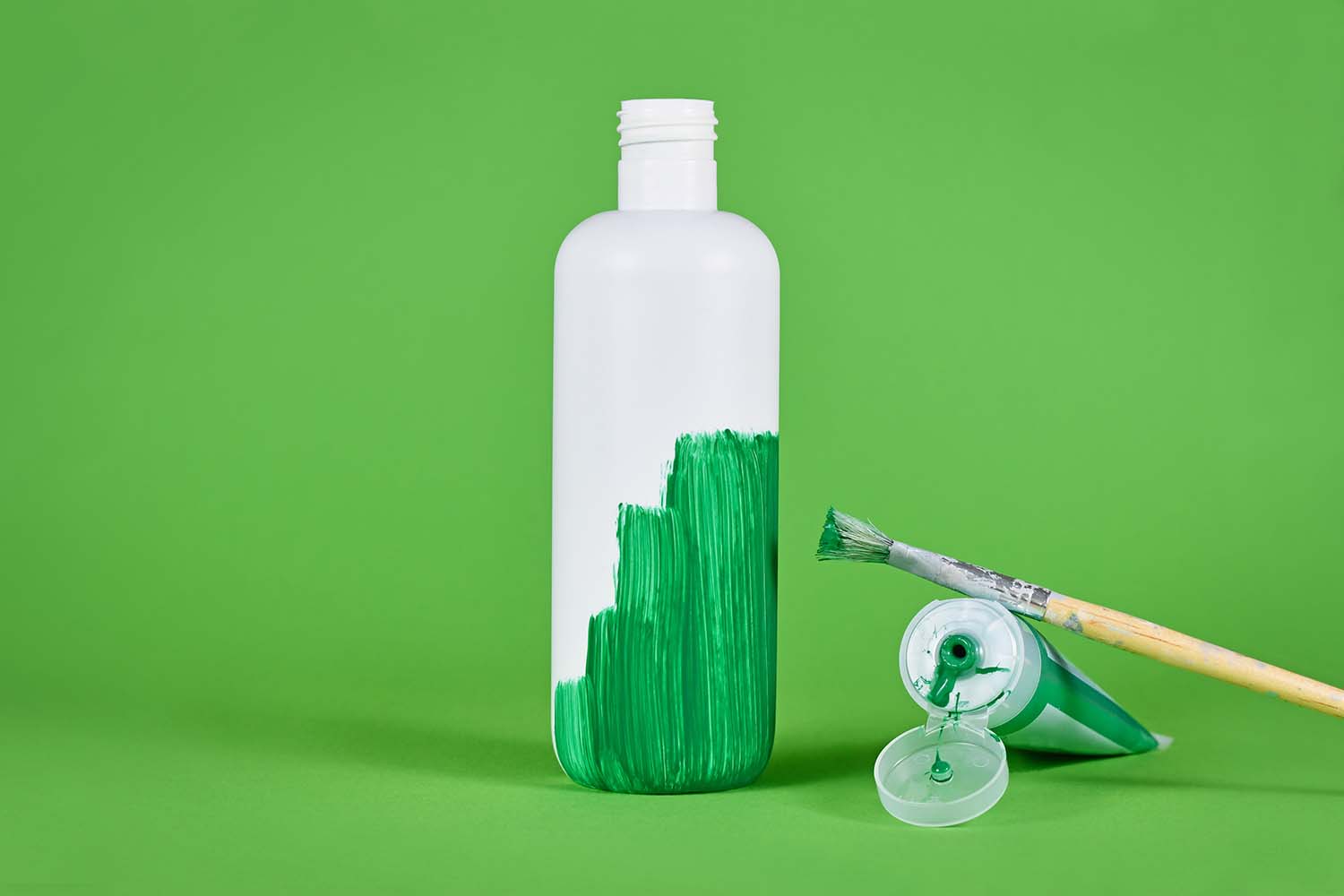
In response to feedback from thousands of stakeholders, B Lab identified the need for more stringent, clear standards that effectively prevent greenwashing and promote meaningful change.
Modified standards aim to address demand for:
- Systemic Change
Advanced standards can more accurately reflect the growing magnitude of the climate crisis and social inequities. - Stricter Parameters
Under current standards, the BIA does not mandate specific practices in order to earn the qualifying Positive Performance score of 80+. This menu approach offers considerable flexibility to companies, allowing them to pick and choose from hundreds of options and focus on impact topics that align with their successes, sometimes misrepresenting the full profile of their sustainability performance. - Regulatory Compliance
Directives such as the European Union (EU) on Empowering Consumers for the Green Transition and Green Claims include performance verification from a third-party assurance model like the B Corp movement.
Key Changes & Challenges
The new draft standards will restructure the Performance Requirement as a whole,.aiming to clarify and improve the current standards with a stronger focus on continuous improvement and measured impact.
Though strategies will continue to be tailored to a company’s specific context (i.e. size and industry), the certification process will shift away from a points-based model and require companies to demonstrate progress across a broader scope of sustainable measures and areas of concern.
Proposed changes to the standards will introduce:
- Mandatory minimum requirements for EVERY Impact Topic:
- Purpose & Stakeholder Governance
- Workplace Culture
- Fair Wages
- Justice Equity Diversity & Inclusion
- Human Rights
- Climate Action
- Environmental Stewardship & Circularity
- Government Affairs & Collective Action
- Complementary Topics
- Interoperability as a New Priority
This revision better aligns with other widely-accepted models of sustainability, specifically with the European Sustainability Reporting Standards framework (ESRS) which achieves compliance through the Corporate Sustainability Reporting Directive (CSRD). - Greater Transparency & Accountability
The new requirements demand increased public disclosure on governance models, sustainability practices and performance data.
When Will the New Standards Take Effect?
Once approved, B Lab will roll out the new standards in a phased manner over a multi-year timeframe to ensure stakeholders have sufficient time and resources to meet the new requirements.
While subject to change, here is an overview of the implementation schedule:
- 2025: Finalize Content
- 2026: UX Updates & New B-impact Assessment Platform Development
- 2027: New Certifications & Recertifications Based on New Standards
Transition Timeline to the New B-Corp Standards
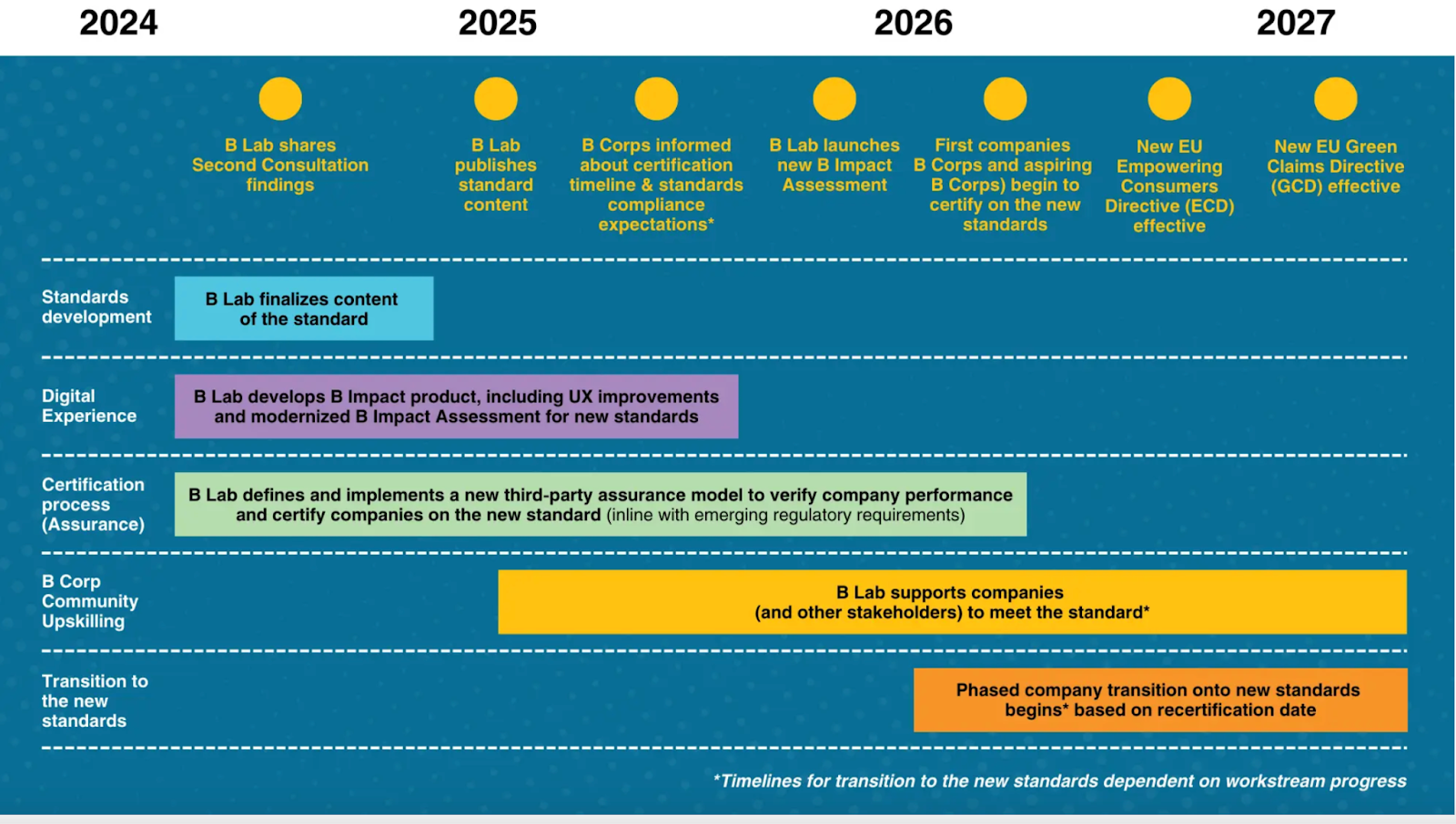
B Lab is working to finalize the new standards by 2025 and hold companies accountable to the new standards by 2027. Source: www.bcorporation.net
Next Steps & Recommendations
Step one for every company is to carefully review and understand the specific requirement changes, regardless of B-corp status.
Then, additional considerations depend upon your company’s unique situation:
- If you already hold a certification…
- How will the update affect your recertification process?
- How will additional general requirements from B-corp inform your company’s ongoing sustainability strategy?
- If you are a small business actively pursuing certification…
- You can still pursue certification under the current standards, but be prepared to respond to changes in the near future.
- Consider how to advance holistic sustainability across your business to prepare for changes instead of focusing on the prescriptive goals of the current standards.
- Even if you don’t intend to certify…
- Awareness of the changes can help inform your competitive strategy
- Once your competitors start responding to the new standards, how might that raise the bar for market access and brand value?
How Can Third Partners Help?
B Corp is one of many sustainability certifications that is evolving. Any company that does not already have an ESG action plan will be playing catch-up relative to peers and competitors. B Corp certification eligibility is just one element in the planning process that we lead companies through to formalize their ESG and sustainability strategy.
Third Partners streamlines compliance efforts by helping companies:
- Navigate new & changing requirements
- Assess materiality of the organization’s most important ESG impact areas
- Navigate unique challenges faced by growth startups when it comes to B Corp adoption and impact on company value and valuation
- Provide clear recommendations to address gaps & opportunities
Contact us today for a complimentary consultation and discover how we can support your company’s commitment to impact reduction & sustainability.