In this article, Adam Freedgood explains how sustainability leaders can approach budgeting more like a CFO by prioritizing initiatives based on business value, risk, ROI, and accountability. Download the free planning template here.
You find yourself in charge of planning sustainability initiatives for a mid-sized company and budget season has arrived. Like many sustainability managers, you are a functional leader without layers of direct reports or a large dedicated budget. How do you manage the resources you need to ensure compliance, continuous improvement, and innovation?
The secret is to start budgeting like a CFO. In financial planning, what supports core operations and growth gets funded. What doesn’t, doesn’t.
Sustainability Budgeting Do’s and Don’ts
Do
- Prioritize projects based on business value and risk.
- Show leadership the expected costs, savings, and returns.
- Share costs with departments that benefit from the work.
Don’t
- Treat every sustainability initiative as equally urgent.
- Request more funding than you need, expecting cuts.
- Put every sustainability expense on your team’s budget.
1. Start with Our Sustainability Budgeting Template
Many businesses are facing higher borrowing costs, rising operating expenses, and continued financial uncertainty. As these pressures carry into 2027, leadership teams are taking a closer look at where money goes.
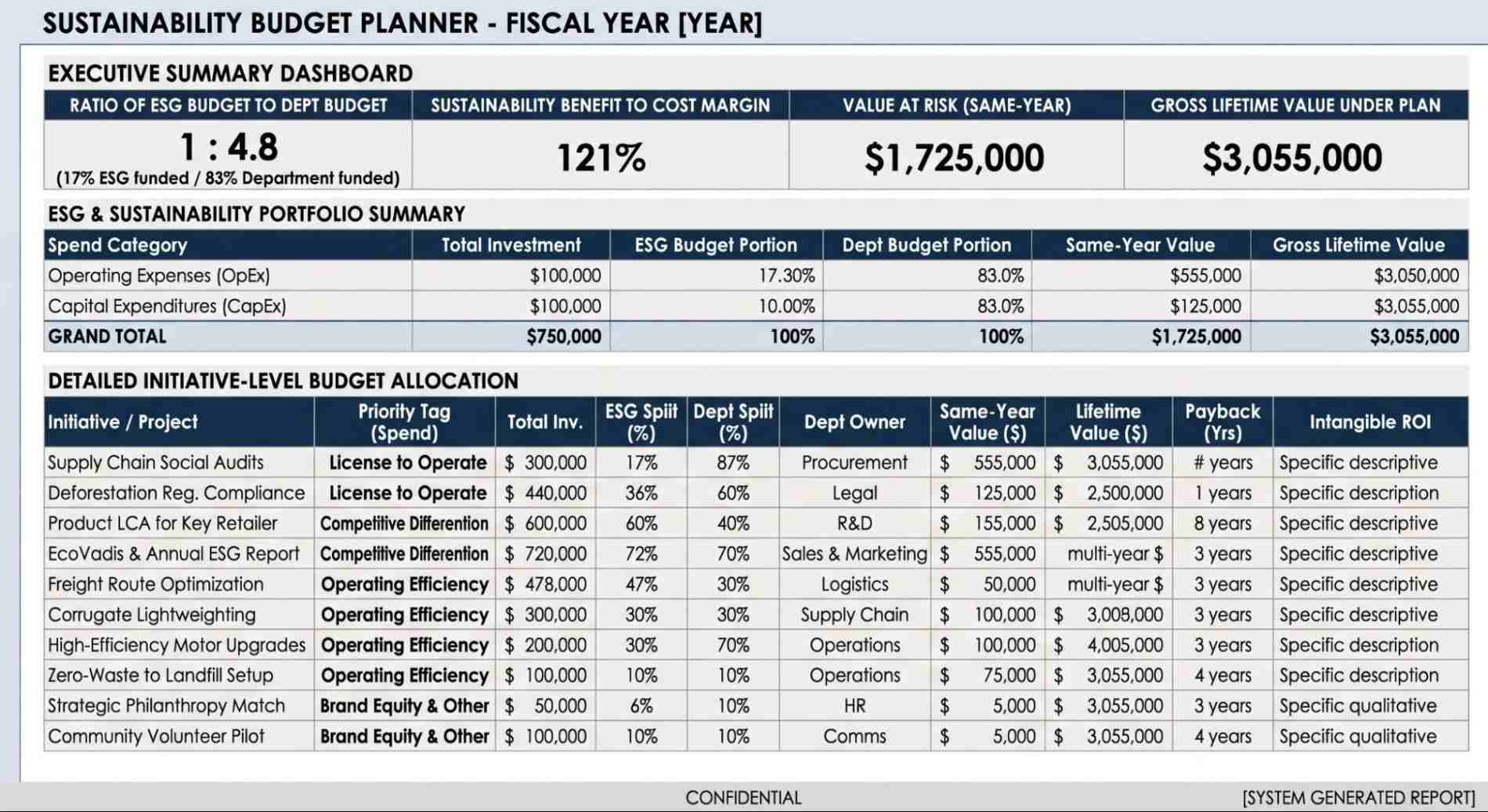
Our ESG & Sustainability Budget Planning Template helps you organize your initiatives, compare funding priorities, and build a stronger case for investment.
Use the template to:
- Prioritize initiatives based on business needs and financial value.
- Compare costs and returns to understand which projects offer the greatest benefit.
- Organize expenses by CapEx, OpEx, and potential shared funding.
Start by listing your planned initiatives in the template. Then follow the steps below to evaluate each project and decide where your budget will have the greatest impact.
[Download the Free Sustainability Budget Planning Template]
2. Prioritize Sustainability Initiatives Like a CFO
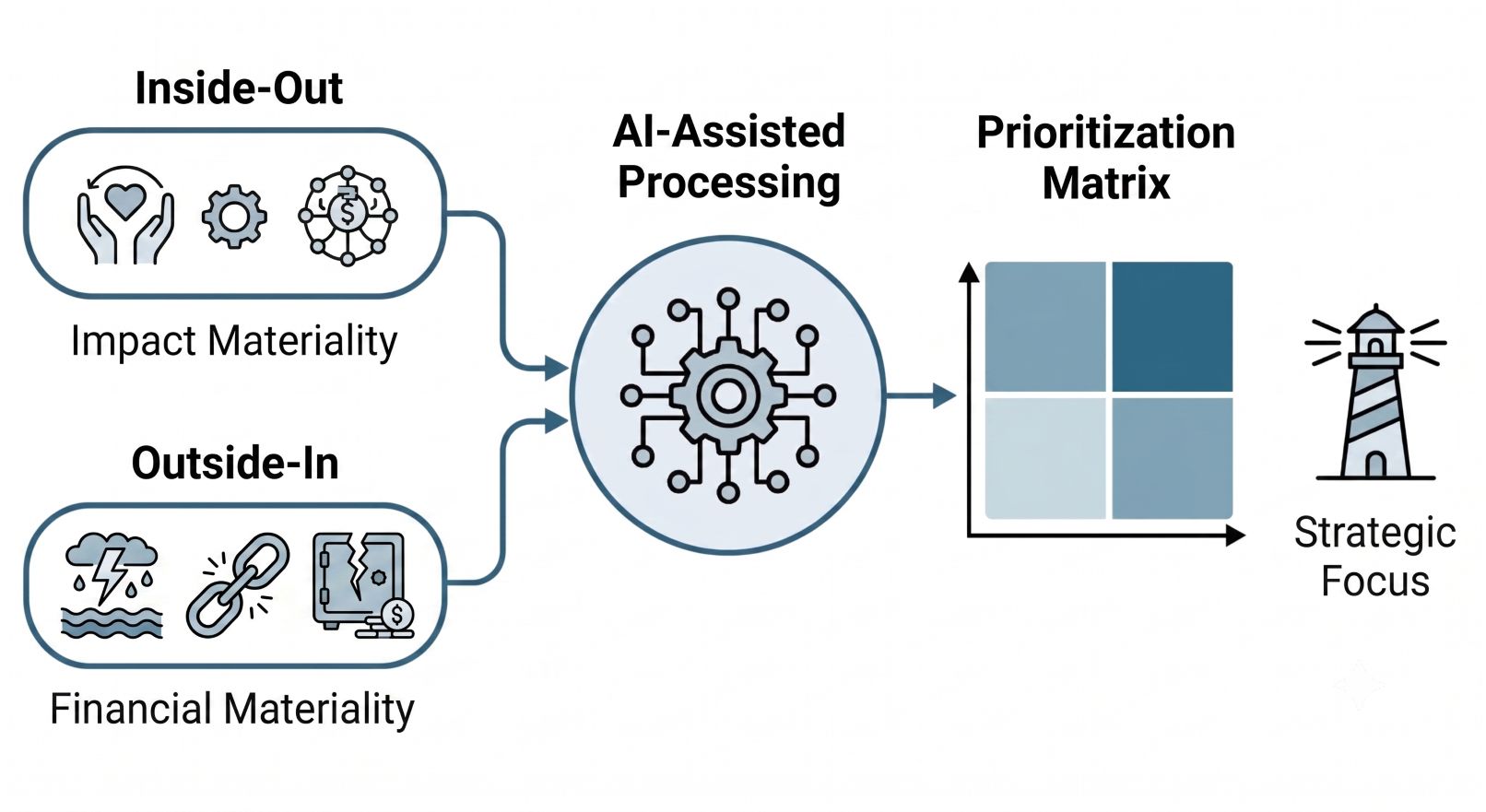
First, every budget “ask” gets a priority tag that executives immediately understand. When you frame initiatives this way, leadership teams have a better understanding of the real opportunity costs of saying “no”. Group your initiatives into these four buckets:
- License to Operate: These are non-negotiables. Without these, the company cannot sell its products or faces significant revenue risks. Lump together trade compliance, regulatory compliance, general risk compliance, and supply chain risk management activities here.
- Competitive Differentiation: This includes anything a customer sees that supports pricing power or new customer acquisition and retention. Group in your B-to-B customer reporting support (e.g., retailer surveys, claims validation, product carbon footprints/LCAs) and customer-mandated sustainability reporting (e.g., EcoVadis, CDP).
- Operating Efficiency: These are your internal cost-savers. All operations-related lean manufacturing, energy efficiency, and waste reduction initiatives go here.
- Brand Equity & Other: These support company culture, brand, and intangibles. Include pilot projects, cultural initiatives, voluntary CSR/sustainability reporting, and strategic philanthropy.
Tip: Be Realistic About What Your Business Needs
A voluntary sustainability report may be valuable, but it doesn’t necessarily carry the same urgency as a regulatory requirement.
Avoid inflating your budget because you expect leadership to cut it. Instead, request what each project actually needs and explain why it matters.
3. Separate CapEx and OpEx
How you categorize expenses can influence whether a project receives funding.
- CapEx items (like facility upgrades) create long-term positive cash flow benefits and can be depreciated over 5+ years, spreading the financial impact. There may even be non-cash, off balance sheet financing methods that your company can use, such as a capital lease.
- OpEx items (like software subscriptions) are pure costs that directly offset revenue in the current year.
4. Measure ROI and Show the Financial Value
Every major budget request needs a clear explanation of its expected return. Track four metrics to help leadership understand the bigger picture:
- Ratio of ESG Budget to Department Budget: This shows the distribution of spending and is a direct indicator of how siloed the sustainability function is. Generally speaking, lowering this ratio is preferable (though there are exceptions), as it proves the broader business is absorbing ESG into core operations.
- Sustainability Cost-to-Benefit Margin: This is the ratio of same-year tangible value creation (cost savings, additional attributable revenue, etc.) to total program spend (both ESG and departmental). A higher percentage is always preferable here.
- Value at Risk: For initiatives that support a positive ROI, what is the total value lost if these projects are not executed? This represents the sum of all same-year measurable ROI that the company stands to forfeit by delaying action.
- Gross Lifetime Value Under Plan: This captures the total multi-year ROI identified across the portfolio, including benefits that accrue in future years, giving executives a clear view of long-term value creation. This number will ebb and flow. If it’s growing year-over-year, that’s an indicator that sustainability programming is increasingly imperative to overall business success. It could also show that there are execution bottlenecks, which is why each metric deserves interpretation.
5. Share Sustainability Costs Across Departments
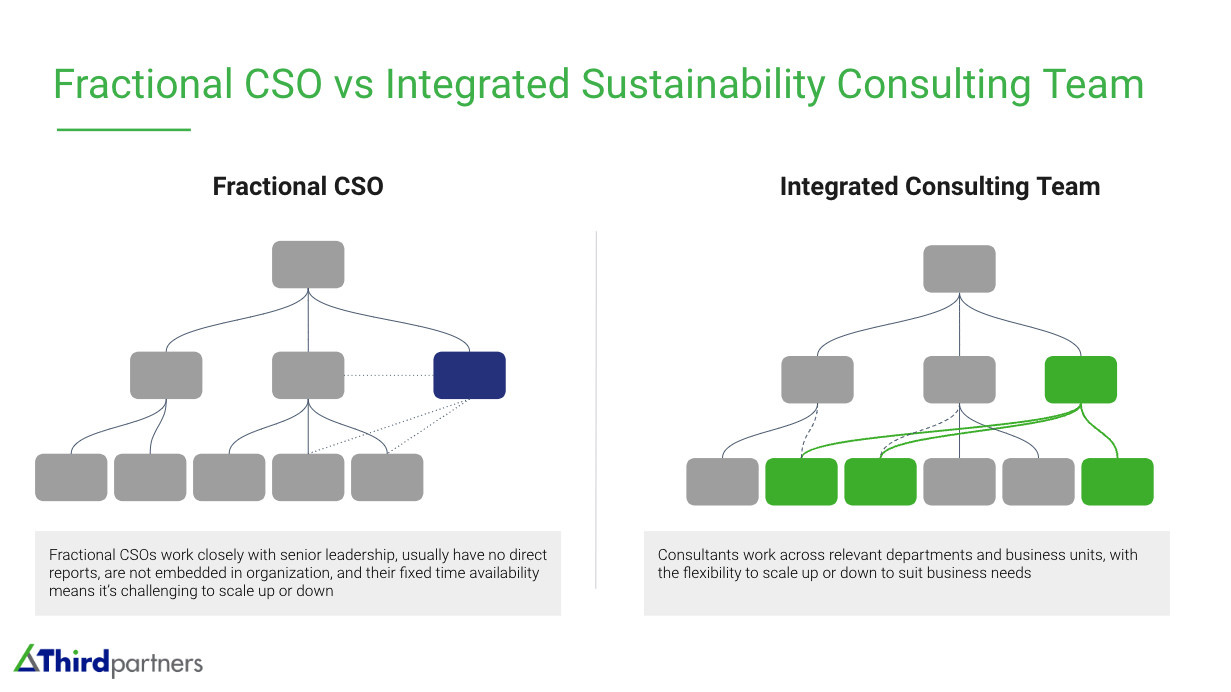
Last but not least, divide projects by accountability and embrace “co-funding.” What do you truly own, and what does a colleague own?
Instead of putting a $100,000 project entirely on the sustainability ledger, split it. The sustainability team might cover 20% of the cost for strategy and oversight, while the shared service department (e.g., Supply Chain) absorbs 80% because the project ultimately modernizes their strategic procurement activities.
For example, Product Carbon Footprints (PCFs) and LCAs are often funded by R&D because they directly support sales compliance and product development.
Build a Sustainability Budget Leadership Can Defend
A strong sustainability budget is not simply a list of programs and expenses. It connects each investment to risk, revenue, efficiency, customer requirements, or long-term business value.
Third Partners helps mid-sized companies build practical sustainability strategies that connect ESG priorities to business performance, operations, compliance, and growth. If your team needs help prioritizing sustainability investments, building the business case, or deciding where to focus limited resources, Third Partners can help.
Download the ESG & Sustainability Program Budget planning template here.
About the Author: Adam Freedgood